Talespinner Status Effects
Read Trick, Prank, poison, and Exposed windows before bosses punish slow turns.
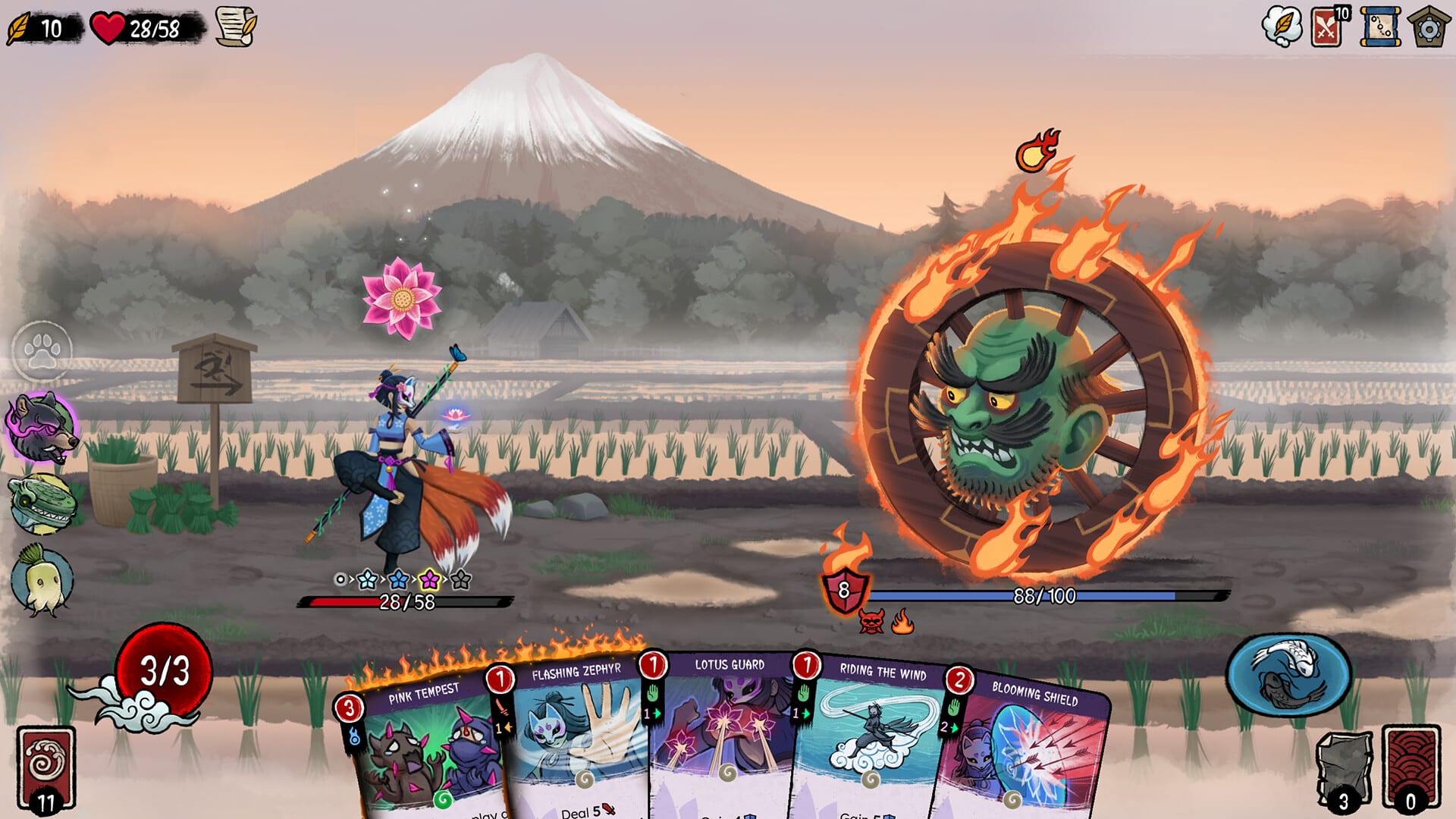
Status effects are the hidden grammar behind Talespinner combat. Flash Cat Games and Kwalee layer debuffs on cards, enemies, and heroes so every biome fight reads differently on Steam and Nintendo Switch after the 2026-08-06 launch. This guide goes deeper than the overview in Combat Basics and ties each keyword to draft choices, channel turns, and boss pacing.
If you are building around debuffs, pair this page with Trick Builds Tier Guidance, Builds Tier Guidance, and Gyokushin when Jade or Fury timing matters.
How to read statuses in a turn
Every status has three questions: who holds it, does it stack, and what removes it. Enemy intents tell you incoming debuffs; card borders tell you what will hurt when you play or channel. Before you end turn, scan hand and draw pile for Muddy, Exhaust, and Envenomed icons—those three ruin burst plans more often than raw damage.
Statuses also interact with Weak Spots and Exposed. Debuffs that shrink your hand or force bad plays delay weak spot breaks, which delays Exposed bonus damage. That chain is why control heroes and Trick shells feel related even when cards differ.
Trick — stack for the detonation
Trick is an enemy-facing debuff that stacks. Community testing and preview coverage agree on the core payoff: when a single enemy accumulates roughly ten Trick stacks, they suffer a large burst of damage—enough to swing elite fights and shorten boss phases when you plan ahead.
Trick rewards patience and setup:
- Small stacks early — Cheap Trick cards chip stacks while you block telegraphed hits.
- Amplifiers — Cards and companions that increase Trick damage multiply the ten-stack payoff; see Trick Builds for draft priorities.
- Delayed bursts — Some skills apply Trick now but detonate extra stacks on a later turn, letting you block this round and cash damage next round.
Trick loses to block-heavy tempo enemies that never let you reach ten before you must spend block cards. When fights drag, compare whether another stack card or a defensive pick keeps you alive—Combat Basics block math still wins ties.
Prank — enemy-wide chaos from demo patches
Prank is a punishing enemy-applied effect documented heavily in demo patch notes. When a foe Pranks you, expect a bundle of penalties rather than one clean debuff. Post-demo tuning shifted numbers but kept the identity: Prank is how trickster yokai ruin your hand while buffing themselves.
Reported Prank components after balance passes include:
- Enemies gain Dodge (reduced from earlier demo values).
- Enemies gain Strength (also tuned down in patches).
- Muddy applied to random cards in hand.
- Exhaust on random hand cards instead of exhausting the entire hand.
- Rotten Fish added on top of the draw pile—a curse-like card with its own cost and battle-end cleanup rules.
- Pranked markers on random cards, extending disruption into future turns.
Prank fights teach why you keep a minimal functional core: enough block and one cheap attack to break weak spots even when half your hand is disabled. Kitsune and Ronin-style elites referenced in developer posts are common Prank sources—prep cleanse, draw, or exhaust answers before act finales.
Envenomed — poison on cards
Envenomed attaches to cards and deals damage when those cards are played. Demo patches raised Envenomed damage to 2 per trigger and changed removal so the status drops after the card is played instead of jumping to another card in hand.
That behavior makes Envenomed a timing puzzle:
- Playing the Envenomed card early may be cheaper than holding it through a multi-hit boss turn.
- Channeling Envenomed cards may still cost HP under negative-status channel rules—see Jade section below.
- Removing or transforming cursed picks at shops beats tanking repeated poison triggers.
Envenomed stacks with hand-shrink effects from Prank and Muddy; treat poisoned hands as a reason to spend Story Points on fixes in Storybook Encounters before biome bosses.
Muddy and Exhaust — hand disruption
Muddy marks cards so they cost more resources or behave awkwardly until cleansed—exact costs depend on card text, but the strategic read is uniform: Muddy taxes your best turns.
Exhaust removes cards from combat for the rest of the fight (or until a rare effect returns them). Prank’s shift from “exhaust everything” to “exhaust two random cards” still hurts when your deck is thin.
Together, Muddy and Exhaust push you toward wider decks with redundant block rather than razor-thin combo hands. Gyokushin players who channel aggressively should note which Muddy cards still channel safely.
Exposed and Weak Spots — not a debuff, but a damage status
Weak Spots are per-enemy armor points revealed by unblocked damage. Reveal all spots and the target becomes Exposed, taking +50% damage on the next qualifying hit. Exposed is the payoff status for precision lines—especially Gyokushin Dragon finishers and Builds Tier Guidance weak spot rush shells.
Exposed is temporary advantage: if you expose a boss but spend the turn blocking, you may lose the window. Sequence Exposed before Fury or Jade-paid finishers, not after.
Fury — Gyokushin’s turn-local spike
Fury is a hero-side buff most associated with Gyokushin. It enhances follow-up attacks on the same turn and expires at end of turn—you cannot bank Fury like Jade. Cards such as Dragon’s Wrath-style finishers pair Fury setup with a heavy strike; mis-ordering Fury after your last attack wastes the buff entirely.
Fury is not an enemy debuff, but it competes with status management: on Prank turns you may need block instead of Fury setup. Read Fury as a status with a one-turn timer.
Jade — resource status with channel costs
Jade is Gyokushin’s stored combat resource used to pay Dragon Cards. You generate Jade by channeling eligible cards—discarding them from hand without playing for their normal cost.
Demo patches established an important rule: channeling cards that carry negative statuses can cost HP. Meditation-style cards gained exceptions, and Power-type channel values to Jade were adjusted—verify live numbers in Updates after each patch.
Treat Jade as a status on your hero that interacts with Envenomed and Muddy hands: channeling a poisoned card might be correct if the Jade enables a kill turn, but wrong if HP is already low.
When to clear vs when to push through
Use this quick decision tree mid-fight:
- Will the status kill me this turn? Block or cleanse first.
- Does the status block my win condition? Trick stacks below five may wait; Envenomed on your only finisher may not.
- Is the enemy Exposed or near ten Trick? Push damage instead of over-clearing harmless debuffs.
Elites that apply Prank plus Strength spikes are priority cleanse targets; trash fights can eat one Envenomed chip if the fight ends next turn.
Statuses across scenarios and companions
Scenarios Overview changes which yokai appear—Hanzo tempo routes face different debuff profiles than Yuki control routes. Fifty-plus companions can add passive shield, recast Trick cards, or tax HP when statuses pile up; cross-read Companions Tier List before charm commits.
Related pages
- Combat Basics — turn flow and weak spot primer
- Trick Builds — stacking Trick to detonation
- Cards Tier List — cleanse and draw staples
- How to Beat Bosses — status pacing on finales
Statuses reward players who read icons once and plan two turns ahead. Learn Trick stacking rules, respect Prank bundles, and never channel poisoned cards without checking HP—those habits transfer across every hero on Steam and Switch.
Frequently Asked Questions
Quick answers to the most common Talespinner questions.
How many Trick stacks trigger big damage?
Community testing points to roughly ten Trick stacks on one enemy for a large burst. Amplifier cards and companions raise the payoff further.
What does Prank do in Talespinner?
Prank is a bundled enemy debuff: dodge and strength on foes, Muddy and Exhaust on your hand, Rotten Fish on draw, and Pranked cards—per demo patch notes.
Does Envenomed stay on cards after you play them?
After demo balance, Envenomed deals 2 damage when played and is removed from that card instead of transferring elsewhere.
Does channeling with negative statuses cost HP?
Yes—demo patches added HP costs when channeling cards with negative statuses, with exceptions on some meditation cards. Check tooltips on your patch.
Is Exposed the same as Trick?
No. Exposed comes from breaking all Weak Spots and grants +50% damage on the next hit. Trick stacks separately and detonates at high counts.