Talespinner Gyokushin — Jade Monk
Bank Jade, expose weak spots, and end fights with Dragon Card finishers.
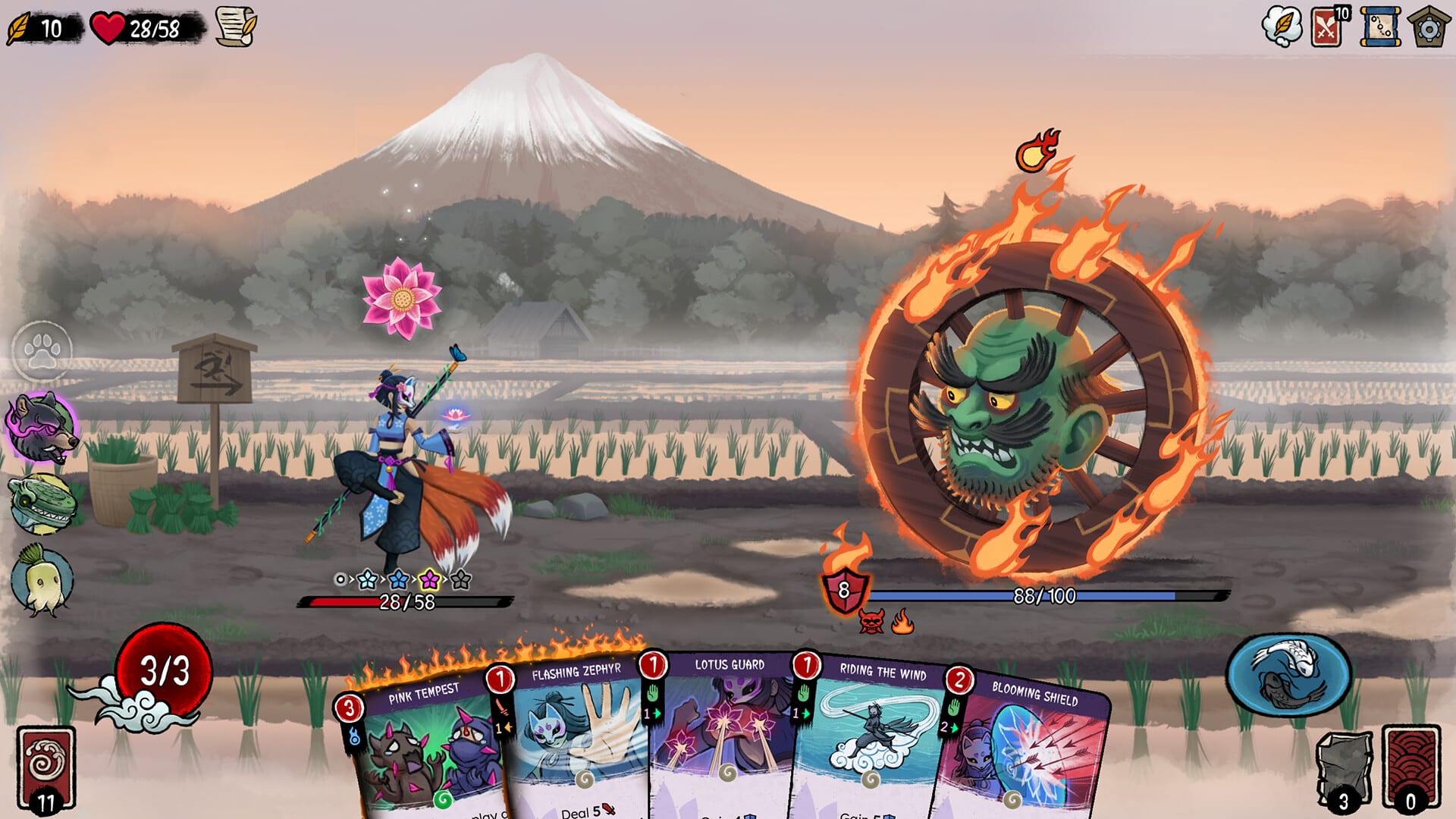
Gyokushin is Talespinner’s jade-hearted warrior monk—the hero featured in the Steam demo and the first character Flash Cat Games detailed in a public dev diary. He is built for calculated pacing: block and probe early, reveal enemy Weak Spots, land Exposed bonus damage, and convert leftover hand value into Jade so Dragon Cards can fire even when motes are empty. Fury then turns a stocked turn into a burst window that must resolve before the turn ends.
This page is the wiki reference for Gyokushin on Steam and Nintendo Switch after the 2026-08-06 launch. Pair it with Combat Basics, Hero Comparison, and Builds Tier Guidance when you translate mechanics into a full run plan.
Playstyle snapshot
Gyokushin rewards players who read enemy patterns and plan two turns ahead. His high-impact lines often cost setup: you may spend an early turn channelling instead of attacking, or holding block while you chip away at weak spot armor. That is intentional—Gyokushin is weaker when treated like a pure aggro deck and stronger when you treat Jade as a second energy bar for the back half of fights.
If you dislike resource banking, compare Hero Comparison and consider a tempo archetype hero instead. If you enjoy Slay the Spire–style scaling payoffs with visible setup, Gyokushin is the clearest entry point in Talespinner.
Exposed weak spots
Every enemy ships with a fixed number of Weak Spots. When you deal unblocked damage, you reveal one spot. Reveal them all and the enemy becomes Exposed. The next attack against an Exposed target deals +50% damage, which is often the difference between stabilizing an elite fight and leaking HP.
Gyokushin’s kit doubles down on this system. Cards such as Pulsing Frailty (named in developer materials) can reveal every weak spot instantly, skipping the grind phase on bosses with large spot counts. Shattering Grasp adds a rider: if the enemy is Exposed, they lose Strength—useful against enemies that inflate their own damage.
Practical habits:
- Prioritize weak spot access in your first biome draft, not only raw damage numbers.
- Save your biggest attack for the turn after Exposed triggers unless a finisher also applies Exposed itself.
- On multi-enemy nodes, focus spots on the unit that will kill you fastest, not the lowest HP target.
Weak spots interact with How to Beat Bosses telegraphs: many bosses hide spots behind block or phase changes, so bring answers that chip block without wasting Exposed windows.
Channelling Jade
Some Gyokushin cards can be channelled instead of played: discard the card from hand without spending motes and gain Jade equal to the card’s channel value. Channeling is how Gyokushin keeps tempo when motes run dry—turn dead draws into stored power.
Demo patch notes mention quality-of-life rules: channelling cards with negative statuses may cost HP, while certain meditation-style cards resist those penalties. Always read the tooltip on your current patch before assuming a channel is free.
Power-type cards historically granted Jade on channel; balance passes may adjust those numbers—verify in Updates after each patch.
Banking Jade early enables late-turn sequences where you play multiple expensive lines in one action. Under-spending Jade feels safe but often loses runs to bosses that expect burst windows.
Dragon Cards
Dragon Cards are Gyokushin’s premium line. They are paid with Jade, not motes, which decouples your biggest turns from the standard energy curve. That is the hero’s signature puzzle: channel on setup turns, then cash Jade on turns where enemies are Exposed or stunned.
Dragon Cards tend to be individually powerful and synergize with deck counting effects. Developer examples cite Crushing Stomp, which adds damage per Dragon Card already in your deck—rewarding players who commit to the archetype instead of splashing one copy.
Demo balance also shifted cards such as Death Between Heartbeats into the Dragon category with high Jade costs and large damage numbers—treat patch notes as live truth when min-maxing.
When drafting neutrals from rewards, ask whether a pick helps you generate Jade, spend Jade, or set up Exposed—neutrals that do none of the three are often skips on Gyokushin.
Fury
Fury is a temporary combat buff on Gyokushin that enhances the next attack after you gain Fury. Example from dev materials: Dragon’s Wrath grants Fury and adds damage to the following strike. Fury expires at end of turn, so you cannot stockpile it across turns like Jade.
The classic Gyokushin burst chains Fury setup, an Exposed target, and a Jade-paid Dragon finisher in the same turn. Missing the sequencing—Fury without a follow-up attack, or Exposed without damage online— is the most common mid-run mistake.
Cards like Fists Follow Fury (adjusted in demo patches) tie directly into this pattern. After balance changes, re-read the card text in-game; wiki tiers in Cards Tier List are guidance, not guarantees.
Run construction and Storybook choices
Gyokushin runs still use the global loop: scenarios such as Hanzo Hattori or Yuki Onna, Storybook pages from Storybook Encounters, and companions covered in Companions Tier List. Gyokushin-specific planning means prioritizing shops that remove dead draws, events that grant Jade or weak spot tools, and companions that stabilize HP while you channel.
Use the deck synergy tool when a reward offers three unrelated powers—Gyokushin punishes greedy picks that ignore Jade payoffs.
Matchups and common failures
Failure mode: zero Jade generators. Dragon Cards sit dead in hand while you take boss damage. Fix by drafting channel outlets or removing low-impact strikes.
Failure mode: Exposed without follow-up. You reveal spots but lack motes or Jade to capitalize. Hold a cheap attack or channel less aggressively the turn before Exposed.
Failure mode: Fury whiff. You gain Fury on the last play with no attacks left. Sequence Fury cards before finishers, not after.
Elites that apply Nasty Cut or Prank statuses (see dev boss diaries for Ronin and Kitsune) disrupt hands—keep a minimal functional core that can block even when key cards are disabled.
Related links
- Characters Hub — roster overview
- Hero Comparison — when not to pick Gyokushin
- Tier List Hub — card and build guidance
- How to Play — full run loop
Frequently Asked Questions
Quick answers to the most common Talespinner questions.
What makes Gyokushin different from the other heroes?
He uniquely combines Jade banking, Jade-paid Dragon Cards, turn-local Fury spikes, and Exposed weak spot payoffs. Other launch heroes use different resource rules described on Hero Comparison.
Can Gyokushin win without Dragon Cards?
Yes, but you ignore his strongest payoffs. Most successful runs still draft some Dragon synergy because Jade spending is how he outscales late elites.
Does Fury stack across multiple attacks?
Fury modifies following attacks according to each card’s text, but unused Fury expires at end of turn. Read the card carefully after patches.
Is Gyokushin viable on Nintendo Switch?
Yes. Switch and Steam share the same hero rules; use Controls for input specifics if you channel quickly in long fights.
Where should I practice Gyokushin before launch?
The Steam demo focuses on Gyokushin and is the best safe space to learn Jade and weak spot sequencing before full roster unlocks.